pharma supply chain Archives - Page 4 of 9 - rfxcel.com
Rfxcel Logo

Uzbekistan ASL BELGISI Update: Deadline for Pharma Serialization Extended

On February 7, 2022 — just 10 days after we posted our Uzbekistan ASL BELGISI update — the country’s State Tax Committee announced that it was “extending the timeframe for the phased introduction of mandatory digital markings” of pharmaceutical products.

The requirements were originally scheduled to take effect on February 1.

The extension was announced in a letter signed by Mubin Mirzaev, the first deputy chairman of the State Tax Committee. A new deadline was not stipulated, so the country’s serialization scheme for pharmaceuticals is effectively on hold until further notice. The letter did not mention 2022 deadlines for other regulated product categories (e.g., tobacco products; alcohol, including wine and wine products; beer and brewing products; appliances; and water and soft drinks).

Delay or not, we expect the serialization and labeling requirements, which are based on Russia’s Chestny ZNAK system, to remain the same. Read our Uzbekistan ASL BELGISI update for more details about the regulations.

More provisions for Uzbekistan ASL BELGISI from the State Tax Committee

Deputy Chairman Mirzaev’s letter outlined two provisions:

      • A provision to instruct the State Tax Committee and CRPT Turon, which operates Uzbekistan ASL BELGISI, to submit proposals to the country’s Cabinet of Ministers for a system to recognize marking codes from other countries, “primarily markings applied [in] the territory of the Russian Federation.”
      • A provision to “implement a mechanism for electronic registration of non-resident foreign manufacturers of pharmaceutical products with the tax authorities.” Manufacturers would be assigned a non-resident taxpayer identification number (TIN) and would have to obtain a non-resident electronic digital signature (EDS).

The letter also said that the “norms for amending the Technical Regulations for the production of pharmaceutical products were transferred from the project for labeling ‘household appliances’ to the project for mandatory digital labeling of pharmaceutical products.”

As we wrote in our Uzbekistan ASL BELGISI update, a pilot for appliances began on July 1, 2021, and mandatory labeling is being introduced in phases. Vacuum cleaners, refrigerators, freezers, washing machines, TVs, and monitors were required to be labeled beginning December 1, 2021.

Final thoughts

The Uzbekistan ASL BELGISI delay illustrates a truth about supply chain regulations: Deadlines change. All the time. Announcements like the one we talked about today should never come as a surprise or catch you off guard.

The good news is that deadline changes are not the end of the world. What’s important is for you to have a supply chain solution that meets established standards, such as the world-leading GS1 standard. If your solution is fast, flexible, scalable, and automated — like our Traceability System — you will be ready to comply and keep your supply chain moving. All the time.

We’ll continue to monitor Uzbekistan ASL BELGISI as we do with other supply chain regulations. In just the last two weeks or so, we’ve written about the Africa supply chain (first of a two-part series), Egypt’s pharmaceutical regulations, Russia Chestny ZNAK requirements for beer and dietary supplements, the United Arab Emirates’ “Tatmeen” platform, and the U.S. Drug Supply Chain Security Act (DSCSA). Count on us to keep you informed about regulations around the world.

And contact us if you have any questions or want to see our solutions in action. Our digital supply chain experts are always here to listen to you, help you evaluate your needs, and work directly with you to design a solution customized for your business.

Understanding the Africa Supply Chain, Part 1

Supply chains are about people. Yes, technology — like the digital solutions we provide — and regulations are important, but people are the true drivers, the alpha and omega. People design supply chains and make them run (efficiently and legally, we all hope). As consumers, people are the final destination of every supply chain; if you don’t understand their needs, wants, and habits, and if your products cannot reach them reliably, you’re out of business. The Africa supply chain is no exception.

In Part 1 of our series about the Africa supply chain, we’re looking at facts and figures about the almost 1.4 billion people on the continent. By understanding the people — where they live, their economies and how they work, and ambitious initiatives that will affect their daily lives — we provide the context for a broader discussion and understanding of the Africa supply chain. Let’s get started.

Africa by the numbers

Geography and population

Africa is big. It’s about 11.7 million square miles (30.3 million square km) total, and about 5,000 miles (8,000 km) from north to south and 4,600 miles (7,400 km) from east to west. Only Asia is bigger: 17.2 million square miles (almost 44.6 million square km).

There are 54 countries in Africa. As we said above, the population is approximately 1.4 billion — that’s about 17 percent of the world population. For comparison, there are roughly 4.6 billion people in Asia, 748 million in Europe, 654 million in Latin America and the Caribbean, 370 million in North America, and 42.5 million in Oceana. Africa is also the youngest continent in the world: The median age is 19.7 years. According to the World Bank, half of the population in Sub-Saharan Africa will be under 25 by 2050.

Africa has the highest growth rate in the world, and its population has increased every year since 2000, when it was approximately 811 million. By 2100, the population will approach parity with Asia. Nigeria is the most populous country, with 206 million people, followed by Ethiopia, which has 115 million. Egypt ranks third — 102 million people — and is the most populous country in in North Africa. (Be sure to read our overview of the Egypt pharmaceutical supply chain to learn about what’s happening there.)

The continent is home to between 1,500 and 2,000 languages, about one-third of the world’s languages. At least 75 of those have more than 1 million speakers.

Urbanization

Africa has led the world in urbanization this decade. As of 2021, 609 million people lived in urban areas; this could reach 722 million by 2026. According to the Population Division of the United Nations Department of Economic and Social Affairs, 22 cities in Africa are expected to grow at an average annual rate of more than 5 percent in the first half of the 2020s, and 58 are expected to grow at 4-5 percent. The two fastest-growing cities in the world are Gwagwalada, Nigeria, and Kabinda, Democratic Republic of the Congo. Cities in Angola, Tanzania, and Mozambique are topping current growth statistics, and by 2035, Africa’s fastest-growing cities are forecasted to be Bujumbura, Burundi, and Zinder, Nigeria.

Proliferation of mobile technology

According to the GSMA, an association representing mobile network operators around the world, 495 million people — 46 percent of the population — were subscribed to mobile services in Sub-Saharan Africa at the end of 2020. This was an increase of almost 20 million over 2019. By 2025, adoption of 4G will double to 28 percent (the global average is 57 percent), and 5G will reach 3 percent of total mobile connections.

GSMA reports that 40 percent of the population in Sub-Saharan Africa is under the age of 15. Overall, Africa’s very young population will drive mobile use. Importantly, we can also assume that this demographic will use their mobile devices for everything from banking and shopping to entertainment, creating opportunities for companies to connect to consumers and involve them in the Africa supply chain.

Economy

Pre-pandemic, United Nations statistical data showed that Africa’s economy grew by about 3.4 percent in 2019, “creating one of the longest stretches of uninterrupted positive economic expansion in [the continent’s] history.” This helped fuel a growth of the middle class year over year.

In 2020, Africa experienced a 3.4 percent contraction in gross domestic product (GDP).

According to the United Nations Industrial Development Organization (UNIDO) Industrial Development Report 2022: The Future of Industrialization in a Post-Pandemic World, the pandemic has caused considerable output loss in Africa, as it has in most of world. Here are projected output losses by 2021 for the “economy groups” in Africa:

    • North Africa (four economies): 7.3 percent
    • Less-developed countries (14 economies): 6.8 percent
    • Sub-Saharan Africa (12 economies): 6.4 percent

For perspective, estimated output losses were 7.5 percent in West Asia (5 economies), 4.1 percent in Northern and Western Europe (4 economies), 2.7 percent in North America and Pacific (4 economies), 10.3 percent in less-developed countries in Asia, and 1.4 percent in China.

According to a quick online survey of Africa-based websites, the top job sectors on the continent are agriculture, which accounts for 15 percent of GDP; infrastructure; mining; service; banking and finance; information and communications technology; entrepreneurship; entertainment; and tourism. See here and here for more information.

In 2020, 453 million people were employed in Africa, with the majority in Eastern Africa. The two most populous countries, Nigeria and Ethiopia, had the highest working populations, about 56.6 million and 51.3 million, respectively.

According to the World Bank, regional growth in Africa projections look like this:

    • Sub-Saharan Africa: Growth for 2022 and 2023 will remain just below 4 percent.
    • East and Southern Africa: Growth of 3.4 percent in 2022; excluding Angola and South Africa, 4.3 percent growth is expected in 2022.
    • West and Central Africa: Growth of 5.3 percent in 2022; the West African Economic and Monetary Union (Benin, Burkina Faso, Côte D’Ivoire, Guinea-Bissau, Mali, Niger, Senegal, and Togo) is projected to grow at 6.1 percent in 2022. Nigeria is expected to grow by 2.9 percent (African Development Bank Group).

Agenda 2063 and the Africa Supply Chain

Agenda 2063 “is Africa’s blueprint and master plan for transforming Africa into the global powerhouse of the future.” It is being implemented through five 10-year plans, the first of which is scheduled to end next year. Many of its Flagship Projects relate to modernizing and expanding infrastructure; therefore, they are directly related to the Africa supply chain. For example:

African High-Speed Train Network: The network will connect all countries’ capitals and commercial centers, including connecting the 16 landlocked countries to major seaports and neighboring countries.

Single African Air-Transport Market (SAATM): The goal is “the full liberalization of intra-African air transport services in terms of market access [and] traffic rights for scheduled and freight air services by eligible airlines, thereby improving air services connectivity and air carrier efficiencies.”

Continental Commodities Strategy: The goal is to move Africa away from being a raw materials supplier to “developing [its] commodities as a driver for achieving the structural, social, and economic transformation of the continent.” Integrating into regional and global value chains is a key part of the strategy.

The African Continental Free Trade Area (AfCFTA): The goal is to accelerate intra-African trade and boost Africa’s “trading position in the global market by strengthening [its] common voice and policy space in global trade negotiations.” Thirty-six countries had ratified the AfCFTA agreement as of February 5, 2021.

Final thoughts

To understand your supply chain, you have to understand people. We hope this overview of Africa was informative, showing where people live, how they work, the continent-wide trends, and what’s being done to ensure the Africa supply chain better serves every person in all 54 countries.

Everything we’ve talked about today influences the Africa supply chain; however, urbanization could be the most telling and important. As cities continue to grow — remember, urban populations are projected to reach 722 million by 2026 — people will demand more access to goods and services, and the supply chain will have to respond nimbly and efficiently. The proliferation of mobile devices and networks, especially among young people, is another important driver.

rfxcel understands supply chains. The technology, the regulations, and how they affect people. Move on to Part II of our Africa supply chain series, where we discuss recent developments and regulations in specific countries. And be sure to contact us if you have any questions or want a short demonstration of our solutions. We’d love to hear from you.

Last but not least, take a look at our other news from the Africa and Middle East region:

Egypt Pharmaceutical Supply Chain: News and Regulations

If you follow our blog (and we know you do), you’ve probably detected a theme over the last few days: global pharma compliance. We’ve written about Russia Chestny ZNAK, United Arab Emirates Tatmeen, Uzbekistan ASL BELGISI, and our rfxcel DSCSA Compliance Library. Today, we’re looking at the Egypt pharmaceutical supply chain. Let’s get started.

Notable news about the Egypt pharmaceutical supply chain

Last August, Egyptian Prime Minister Mostafa Madbouli told a gathering of government officials that the country would prioritize the “localization” of the pharma industry. He said President Abdel Fattah al-Sisi had tasked the government with developing an executive plan to this end.

It seems to be working: the Egypt pharmaceutical supply chain is enjoying strong growth. Last month, Egyptian Drug Authority (EDA) Director Dr. Tamer Essam said the country’s pharma exports had risen to 35 percent, an all-time high. “There is no medicine in the world or vaccine that is not manufactured in Egypt,” he said. In February 2021, the EDA announced it was launching an export subsidy initiative and had begun reviewing and updating all export procedures to ensure they complied with global regulatory requirements.

In April 2021, the head of the General Division of Drug Traders at the Federation of Egyptian Chambers of Commerce (FEDCOC), Ali Auf, said Egypt produced about 85 percent of its pharmaceutical needs domestically (and imported only 15 percent).

Auf made these statements two days after President Sisi inaugurated Gypto Pharma City, which embodies Egypt’s drive for pharmaceutical self-sufficiency. Situated on roughly 44.5 acres in Khanka, about 20 miles from Cairo, it’s one of the largest “medicine cities” in the region. It has facilities for production, administration, industrial services, and networks.

Egypt envisions Gypto Pharma City as a regional hub for the international pharmaceutical and vaccine industries, calling it “one of the most important national projects … with the aim of possessing the modern technological and industrial capacity in this vital field.”

The Egyptian Pharmaceutical Track & Trace System

The goal of the Egyptian Pharmaceutical Track & Trace System (EPTTS) is end-to-end traceability and product authentication across the Egypt pharmaceutical supply chain to reduce counterfeits, increase efficiency, and protect consumers. Appropriately, this dovetails into what the government has said about Gypto Pharma City — that it will “help citizens obtain high-quality and safe pharmacological treatment, end monopolistic practices, and control the prices of medicines.”

At first, the Ministry of Health and Population managed EPTTS; however, Law No. 151 of August 2019 essentially transferred those duties to the newly formed EDA. (It also created another organization, the Egyptian Authority for Unified Drug Procurement, a “centralized procurement and supply interface.”) The EDA was initially affiliated to the prime minister, but Presidential Decree 18/2020 of January 2020 gave it more autonomy.

The EDA “inherited” three organizations from the Ministry of Health and Population:

    • The Central Administration of Pharmaceutical Affairs (CAPA) registers pharma products, issues licenses for the establishment of pharma entities, and licenses the import and export of pharma products. It’s also responsible for regulating prices and evaluating clinical trials and studies of drugs.
    • The National Organization for Drug Control and Research (NODCAR) works to ensure the quality, safety, and effectiveness of pharma products, cosmetics, and insecticides. NODCAR must certify every pharmaceutical product before it can be registered, marketed, advertised, distributed, imported, or exported.
    • The National Organization for Research and Control of Biologicals (NORCB) monitors, inspects, and releases all biological products for human or animal use, such as vaccines.

Like most countries, the Egypt pharmaceutical supply chain follows GS1 labeling standards, characterized by Global Trade Item Numbers (GTINs), Serialized Global Trade Item Numbers (SGTINs), 2D DataMatrix codes, GS1-128 barcodes, serial shipping container codes (SSCCs), and Global Location Numbers (GLNs). It is also using GS1’s Electronic Product Code Information Services (EPCIS) standard.

Secondary packaging must be marked with a 2D DataMatrix code with the GTIN, expiry date, batch number, and a randomized serial number. EPTTS’ original plan was to require these data points to be presented in a specific sequence, but this was nixed. Cases and pallets must have a GS1-128 barcode or a DataMatrix code with the SSCC.

EPTTS requires aggregation, including maintaining the parent-child relationship, but has yet to provide details. We’re also waiting for specifics about some aspects of serialization, including if serial numbers can be reused.

For data and compliance reporting, supply chain actors are required to submit data to a GS1 Global Data Synchronization Network (GDSN) database. They must upload photos — as many as six of them — that clearly show the product packaging and other details, including the GTIN, brand name, storage instructions, country of origin, product name, and any warning statement. To date, however, the government hasn’t published specifications for communicating with the EPTTS database.

A pilot to test EPTTS was held from December 1, 2019, to January 12, 2020. Participants have shared feedback, but there hasn’t been much movement since. GS1 Egypt and the EDA are apparently still working on the implementation guidelines, which are now in their third iteration.

Final thoughts

The Egypt pharmaceutical supply chain regulations are a work in progress, and we’ll continue to follow developments and share updates when there’s concrete news.

But as we said in our overview of UAE Tatmeen, the global push for pharmaceutical traceability and serialization is continuing at a furious pace. If you’re a manufacturer, a distributor, a third-party logistics provider, a dispenser — any actor in the supply chain — waiting for Egypt or any other country to formalize their regulations is not a wise strategy. You have to have a solution now, preferably one that will work in every country.

That’s what our Traceability System does. Our supply chain experts can demonstrate in a few minutes how it automates compliance and optimizes just about every other aspect of your operations. Contact us today to see it in action. And continue following our blog. We’ll be writing more about global pharma regulations in the coming weeks (and months and years).  For example:

UAE Pharmaceutical Traceability: Ensuring Transparency with the “Tatmeen” Platform

The global push for pharmaceutical traceability and serialization continues at a furious pace. Today, we’re looking at the United Arab Emirates (UAE), whose Ministry of Health and Prevention (MOHAP) in June 2021 announced the “Tatmeen” platform for UAE pharmaceutical products traceability. There are key deadlines this year, so let’s take a look.

UAE Pharmaceutical Products Traceability and the Tatmeen System

MOHAP established Tatmeen, which means “assurance” in Arabic, in Ministerial Decree No. 73 on June 14, 2021. Described as a “central command center,” it’s a GS1-based platform for UAE pharmaceutical products traceability. MOHAP’s partners include the Dubai Health Authority (DHA), Department of Health (Abu Dhabi), and EVOTEQ, a “digital transformation catalyst” based in the UAE, and GS1 UAE.

Tatmeen’s goals should sound familiar:

    • Fight counterfeits and illegal and substandard medications
    • Eliminate unauthorized imports
    • Improve recall management
    • Ensure expired and about-to-expire drugs don’t reach consumers
    • Forecast demand and avoid shortages
    • Move drugs where they’re needed quickly and safely
    • Protect pharma companies, including their intellectual property rights

These other aspects should also sound familiar:

    • Products are scanned at every node of the supply chain
    • Product information is reported into to a central repository (in this case GS1’s BrandSync platform)
    • Scanning captures and verifies data in real time and reports information into a central database
    • Hospitals and pharmacies scan when drugs arrive at their facility and when they’re dispensed
    • Patients and consumers can scan with mobile devices to validate products, report expired products, fakes, and suspected gray market activity

Tatmeen will integrate with the DHA’s electronic medical record system, Salama (incorrectly identified as “Salam” in some industry sources). It will also utilize DHA’s Tarmeez, a paperless drug and medical supplies management system that gives authorized users access to a centralized electronic catalog of all available inventory.

Tatmeen labeling and reporting requirements

All conventional medicines sold, distributed, or stored in the UAE are regulated and must be serialized. These products are exempt:

    • Free samples
    • Products imported for personal use only
    • Medical devices and supplies
    • General sales list (GSL) products

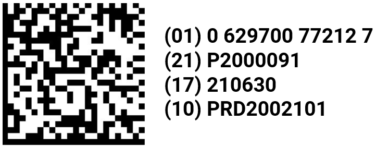
And —surprise, surprise — UAE pharmaceutical products traceability requirements should sound familiar. Secondary packaging must contain four data points in a GS1 DataMatrix code and in human-readable form:

    1. Global Trade Item Number (GTIN)
    2. Randomized serial number (up to 20 characters)
    3. Expiry date (in YYMMDD format)
    4. Batch or lot number

This example is adapted from the MOHAP’s serialization guide:

UAE DataMatrix Code

Aggregation requirements should also ring a bell: All logistic units must be aggregated and labeled with a GS1-128 barcode encoded with a serial shipping container code (SSCC). Manufacturers are responsible for aggregation.

If a brand owner regards an item as a trade item, “it may additionally be identified with a GTIN.” Distributors, wholesalers, and health facilities that unpack and re-pack products to deliver to points of dispensing are required to aggregate the logistic units using their own SSCC codes.

Marketing authorization holders (MAHs), brand owners, manufacturers, or their subsidiaries must register and upload the mandated product master data into the BrandSync platform.

Domestic and foreign manufacturers, third-party logistics providers, batch releasers, contract manufacturing organizations, distributors, licensing agents, and MAHs are responsible for collecting serialized product item traceability records and reporting them to Tatmeen.

UAE pharmaceutical products traceability rollout and 2022 deadline

There was a 6-month “status adjustment” period after Tatmeen was announced for manufacturers and marketing authorization holders to register with the BrandSync platform and begin using 2D DataMatrix codes. This deadline passed on December 13, 2021.

The next major deadline is December 13, 2022. By that date, all supply chain actors in the UAE must obtain a Global Location Number (GLN) from GS1 UAE to identify their organization, where it’s located, and other required information. Relevant stakeholders must also begin reporting serial numbers to Tatmeen and begin aggregation with GS1-128 barcodes and SSCCs.

Final thoughts

We noted a few times that parts of the Tatmeen regulations should sound familiar. If you follow our blog and read our articles about pharmaceutical regulations in other countries — DSCSA in the United States, Chestny ZNAK in Russia, ANVISA in Brazil, ASL BELGISI in Uzbekistan, and so on — everything about UAE pharmaceutical products traceability should ring a bell.

As we said right at the start today, the global push for pharmaceutical traceability and serialization continues at a furious pace. Requirements may vary from country to country, but their essence is the same (e.g., protecting consumers, serialization, traceability, electronic reporting, central repositories, GS1 standards). Tatmeen is just one more example in a very large regulatory ocean.

It’s easy to feel swept up in this current. And, truth be told, if you’re not complying now or preparing to comply by published deadlines, you’re putting your business in jeopardy. If you have questions about Tatmeen or complying with pharmaceutical serialization and traceability regulations in any country, contact us today. In just a few minutes, our supply chain specialists can demonstrate how our award-winning Traceability System ensures you’re compliant in any country, today, tomorrow — always.

For even more information, check out our Global Compliance Page, download our Worldwide Pharmaceutical Compliance Requirements white paper, and catch up on other pharma news in our blog:

DSCSA Compliance Library: Comprehensive DSCSA Information in One Location

Welcome to the rfxcel DSCSA Compliance Library. It’s a collection of our key DSCSA resources (as of September 2023) and is a convenient place to get information as the industry navigates the “extended stabilization period” until FDA enforcement begins on November 27, 2024.

We will, of course, continue writing about the DSCSA and providing the best supply chain solutions to ensure manufacturers, wholesalers, dispensers, repackagers, third-party logistics providers — all pharmaceutical stakeholders — meet the requirements and remain compliant forever.

So bookmark this page and our blog. You can also subscribe to our newsletter to make sure you don’t miss anything about the DSCSA and other important developments in the pharma industry. Just fill out the short form at the bottom of any page on our website.

And of course, contact us today with your questions about the DSCSA or anything else about the pharma supply chain. Our experts are here to help.

A note about the rfxcel DSCSA Compliance Library

Please note that that we haven’t included everything we’ve written or presented about the DSCSA. Deadlines and requirements have changed since the law was enacted in November 2013, so some of our earlier pieces are, logically, outdated.

The DSCSA in our blog

DSCSA compliance white papers

Our top DSCSA news items

­­Our top DSCSA webinars

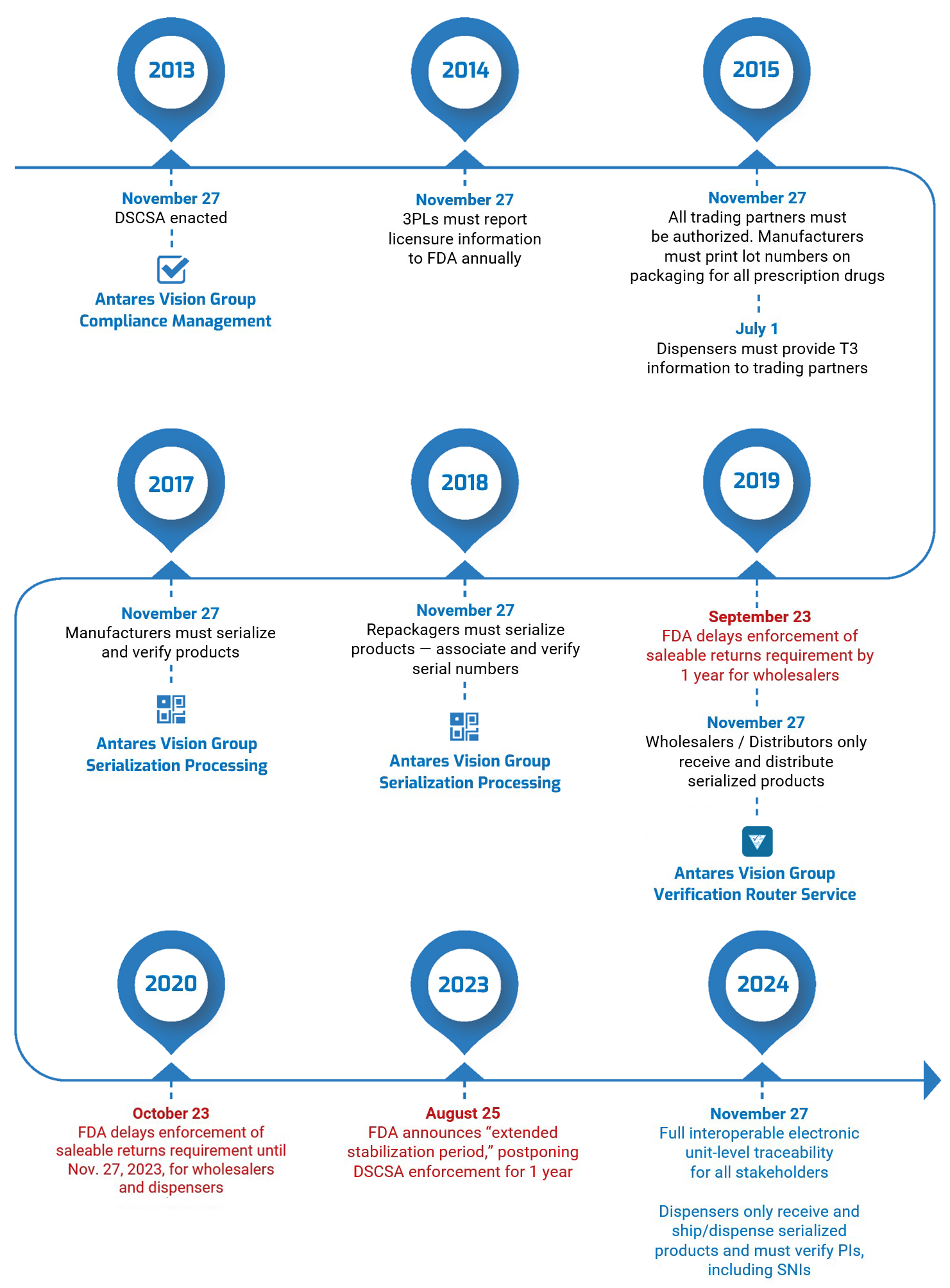
The DSCSA timeline

A timeline showing key dates of the U.S. Drug Supply Chain Security Act (DSCSA) from 2013 to 2024

Uzbekistan Traceability: Advancing Supply Chain Transparency and Safety

Note about Uzbekistan traceability: On February 7, 2022 — just 10 days after we posted this article — Uzbekistan’s State Tax Committee announced that it was “extending the timeframe for the phased introduction of mandatory digital markings” for pharmaceutical products. The February 1 deadline is longer in effect for this product category. Read the details here.


On February 1, 2022, Uzbekistan traceability requirements for medicines and medical devices will go into effect. It’s the latest compliance deadline in the country’s push for serialization and digital marking regulations that will affect an array of industries. Here’s a breakdown of the law and the latest Uzbekistan traceability updates.

The Uzbekistan Traceability System: ASL BELGISI

The Uzbekistan traceability system is called ASL BELGISI. It’s managed by CRPT Turon, the equivalent of Russia’s Center for Research in Perspective Technologies (CRPT), which manages Russia’s National Track and Trace Digital System (Chestny ZNAK).

On November 20, 2020, the Uzbekistan government published Decree PKM-737, “Establishment of Obligatory Digital Labeling.” It mandates serialization for tobacco products; alcohol, including wine and wine products; beer and brewing products; appliances; medicines and medical devices; and water and soft drinks.

Furthermore, it requires supply chain participants to register with a national catalog of labeled goods; when an application is approved, the participant receives an account and is granted access to the system.

According to the CRPT Turon website, the “main task” of ASL BELGISI “is to guarantee consumers the authenticity and declared quality of the purchased products.” Like Chestny ZNAK, consumers can download a mobile app to scan products, report suspect products, and provide feedback about the system.

Marking requirements

Uzbekistan traceability requirements mirror those mandated in Chestny ZNAK. All domestically produced and imported goods must be marked with DataMatrix codes that are traced across the supply chain through a four-step process:

    1. CPRT Turon assigns a unique DataMatrix code to each product and the manufacturer or importer places it on the packaging.
    2. The product’s movements are traced throughout the supply chain, from the factory or point of importation to the consumer, via scanning of the DataMatrix code.
    3. Retailers scan the codes when products are stocked and sold.
    4. Consumers can use the ASL BELGISI app to check a product’s legitimacy (i.e., confirm that it’s not a counterfeit) and access product information.

To get DataMatrix codes, participants must be registered with ASL BELGISI, describe the goods in a national catalog of labeled goods, then formally order the codes and apply them to the products. The codes must be applied to packaging or a product label according to the ISO/IEC 16022-2008 “Automatic identification and data capture techniques – Data Matrix bar code symbology” specification. At present, each DataMatrix code costs 68 som (excluding VAT), which is quite literally a fraction of a U.S. dollar: $0.0063.

Like its Russian counterpart, ASL BELGISI uses “verification keys” and “verification codes.” These are also commonly known as crypto codes. CRPT Turon generates these codes.

Generally, the DataMatrix codes for products in every regulated industry must include four data points:

    • A 14-digit product code (i.e., Global Trade Item Number, or GTIN)
    • A 13-character randomized serial number generated by CRPT Turon or a supply chain participant
    • A four-character verification key generated by CRPT Turon
    • A 44-character verification code generated by CRPT Turon

For aggregation, a Serial Shipping Container Code (SSCC) number must be provided in a one-dimensional barcode following the ISO 15394:2009 “Packaging – Barcode and two-dimensional symbols for shipping, transport and receiving labels” specification.

Regulated industries and key dates/requirements

Uzbekistan traceability regulations currently apply to five product categories: tobacco; alcohol, including wine and wine products; beer and brewing products; appliances; medicines and medical devices; and water and soft drinks. Below, we list the latest information about each category.

Filter cigarettes

    • January 1, 2021: only labeled products may be produced and imported
    • July 1, 2021: manufacturers may ship only labeled products to wholesalers
    • October 1, 2021: distributors may ship only labeled products to retailers
    • January 1, 2022: sale of unmarked cigarettes is prohibited
    • October 1, 2022: mandatory labeling for all types of tobacco products

Alcohol

    • January 1, 2021: only labeled products, including wine and wine products, may be produced and imported
    • December 1, 2021: alcoholic beverages packaged in metal containers, including aluminum containers, must be labeled
    • December 1, 2021: aggregation required for alcoholic beverages, including wine and wine products
    • November 1, 2022: aggregation required for alcoholic beverages packaged in metal containers, including aluminum containers

Beer and brewing products

Mandatory labeling began on April 1, 2021.

Appliances

A pilot for appliances began on July 1, 2021. Mandatory labeling is being introduced in phases. Vacuum cleaners, refrigerators, freezers, washing machines, TVs, and monitors were required to be labeled beginning December 1, 2021.

Medicines and medical devices

    • June 1, 2021: 6-month pilot for medicines and medical devices begins
    • January 28, 2022: CRPT Turon announces that the pilot is officially closed
    • February 1, 2022: only labeled products may be produced and imported

CRPT Turon reported that, during the pilot, all participants successfully registered with ASL BELGISI and registered agreed-upon product in the national catalog of labeled goods. They also successfully installed marking equipment on production lines, trained employees to use the equipment, and released batches of properly labeled, serialized products.

More about the requirements for medicines and medical devices

In addition to a DataMatrix code that includes a 14-digit product code (i.e., GTIN), a 13-character randomized serial number, a 4-character verification key, and a 44-character verification code, packaging must have a human-readable GTIN, lot number, expiration date, manufacturing date, and serial number.

Digital marking must be applied directly to packaging on the production line in a “specially designated place” and not be larger than 10×10 millimeters. The codes must be affixed in a way that prevents them from being separated from packaging during the entire shelf life of the product. Codes may not be printed on external packaging material, including transparent film/wraps, and my not be obscured by other information.

Water and soft drinks

This product category includes bottled water, soft drinks, and fruit and vegetable juices.

    • June 1, 2021: pilot for water and soft drinks begins
    • March 1, 2022: only labeled products may be produced and imported

Final thoughts

In June 2021, CRPT Turon announced that it had issued more than 350 million codes, including more than 200 million for tobacco products, almost 130 million for alcohol products, and approximately 20 million for beer products.

As of today (January 28, 2022), it reports that it has issued nearly 583 million codes for tobacco products, more than 300 million for alcohol products, almost 143 million for beer products.

These figures illustrate a simple fact: Strict serialization and traceability regulations are here to stay in Uzbekistan. Russia has led the way with Chestny ZNAK, which arguably has the world’s toughest supply chain requirements, and we should watch the regulatory landscape in the other Newly Independent States (NIS) — Armenia, Azerbaijan, Belarus, Georgia, Kazakhstan, Kyrgyzstan, Moldova, Tajikistan, Turkmenistan, and Ukraine.

As we said above, ASL BELGISI, the Uzbekistan traceability system, mirrors Russia’s Chestny ZNAK. rfxcel is an undisputed leader in Chestny ZNAK compliance. Consider these facts:

  • We’re an official CRPT partner for medications, bottled drinking water, tobacco, footwear, tires, light industry, perfumes, dairy, bicycles, and wheelchairs.
  • We’ve demonstrated to the CRPT that our solutions for traceability and compliance meet its stringent requirements.
  • We’re accredited as an IT company by Russia’s Ministry of Digital Development, Communications, and Mass Media.
  • We’re one of the few providers with active implementations in Russia (e.g., major global consumer goods and pharmaceutical companies).
  • We have an ever-growing Moscow-based team that knows the regulations and brings expertise in key areas of supply chain management and technology.
  • We’ve led the way in thought leadership with white papers and industry updates and information. (See the list below for a sample.)

We’ve also developed end-to-end traceability and compliance hubs for governments that want to lock down their supply chains with the best digital technologies and solutions. Read more about those here and here.

Contact us today to learn more about our traceability and compliance solutions. Our digital supply chain experts will share a short demo of our award-winning Traceability System and show you how to remain compliant and agile no matter where you do business.

A sample of our Chestny ZNAK coverage:


Who Investigates Counterfeit Cosmetics Products?

In our last blog post, we talked about the global problem of counterfeit cosmetics. Today, we’re talking about who investigates counterfeit cosmetics products, starting with how cosmetics are regulated in the United States and the EU.

Regulation of cosmetics products varies greatly from country to country, so our discussion today should not be taken as an overview of what to expect everywhere cosmetics are sold. Enforcement of laws and the actions authorities take to target counterfeits also vary.

What is universal, however, is that the cosmetics industry faces unique challenges with consumer safety, increased consumer demand for transparency, and being targeted by counterfeiters. It’s good to know who investigates counterfeit cosmetics products and what measures you can take to be part of the solution.

Who investigates counterfeit cosmetics products: USA and EU

Counterfeit cosmetics are dangerous because the criminals who make them don’t follow regulations or standards for production. Fakes are often contaminated with “stuff” you really don’t want to think about, let alone put on your face, such as bacteria, animal and human feces, arsenic, and mercury. So, regulators keep an eye on cosmetics.

United States

In the United States, the Food and Drug Administration (FDA) is the governing body for cosmetic regulations. Cosmetics products do not require FDA approval — but they are regulated. The Federal Food, Drug, and Cosmetic Act (FD&C Act) and the Fair Packaging and Labeling Act (FPLA) explain the FDA’s requirements, restrictions, and disciplinary actions regarding cosmetics.

The FDA focuses on preventing adulteration and misbranding, mislabeling, and harmful ingredients or drugs. Adulteration refers to products or product ingredients that are not in line with FDA regulations or that have been contaminated. A misbranded product is “improperly labelled or deceptively packaged,” which could include counterfeit cosmetics products. The FDA prohibits 11 chemicals from being used in cosmetics products.

Additionally, the FDA reserves the authority to request recalls and work with the Department of Justice, Federal Bureau of Investigation (FBI), and Border Customs if any violations are found. It maintains a “Cosmetics Recalls & Alerts” page and has a searchable “Enforcement Report” database of recalled products.

The European Union

Cosmetics products manufactured in and imported to Europe are regulated under the EU Cosmetic Regulation. Like the FDA, the EU regulates ingredients and labeling; generally, however, the regulations are broader and more precisely defined.

For example, more than 1,300 substances (e.g., chemicals, colorants, and preservatives) are banned from cosmetic use, and hundreds more are permitted only under certain conditions. The regulations also mandate Good Manufacturing Practices (GMP), whereas the FDA only suggests GMP as “guidelines for effective self-inspection.”

Furthermore, the EU requires significant product documentation. Every cosmetics company must have a “responsible person” for every product they make. This person is responsible for ensuring products are safe and comply with regulations, and must submit a cosmetics product notification through an online portal before a product can be sold.

The responsible person must also create a product information file that includes the name, description, and nature of the product; description of the manufacturing methods; statement of compliance with regulations and GMP; a product safety report; and data about animal testing, if any. They must also assemble a product safety report that contains product safety information and a product safety assessment.

Do consumers have a role?

Yes, and it begins with vigilance with prices, packaging, and product quality:

      • Prices: If the price is too good to be true or just noticeably cheaper than the last time you bought it, there’s a good chance it’s a fake.
      • Packaging: The printing might look shoddy or the colors might seem off. There might not be a barcode. There might not be packaging at all, and the products might be offered in bulk.
      • Product: If the consistency or texture seem different, it’s likely a fake

In the United States, consumers can “report suspicions concerning the manufacture or sale of counterfeit or pirated goods” to the FBI. For suspected counterfeit cosmetics products seen online, consumers can contact the FBI Internet Fraud Complaint Center. The FBI has also partnered with the National Intellectual Property Rights Coordination Center to create a tip line where consumers can report products they suspect to be fake.

In the EU, consumers are encouraged to contact their local authorities about counterfeit cosmetics products. Depending on the nature of the situation, the authorities might investigate themselves or contact the appropriate investigative body, which could include Europol. The United Kingdom has Action Fraud, an online reporting tool for fraud and cybercrime.

Consumers should also be aware of what brands are doing to combat counterfeits and consumer engagement programs that encourage people to report suspicious products.

Final thoughts

If you really want to drill down into the U.S. and EU regulations, download our “Global Cosmetics Market” white paper today. It also has a section about regulations in Singapore, plus more information about counterfeit cosmetics products.

In “Top Supply Chain Trends of 2021,” we posed some important questions companies should ask themselves as we move toward what is likely to be another challenging year for supply chains. Many of those questions, listed below, fit perfectly with what we talked about today — regulations, counterfeits, brand protection, consumer engagement.

Your supply chain is where all of these concerns converge. Which is why you should schedule a short demo of our solutions. In about 15 minutes, we can show you the basics of our Traceability System and how it transforms your supply chain into a strategic asset that will improve and protect every facet of your business.


  • Are you keeping up with supply chain trends?
  • Are there gaps and blind spots in your supply chain?
  • Are counterfeits a problem in your industry?
  • Are you doing everything you can to protect your brand?
  • Are you actively reaching out to your customers to bring them closer to your brand?
  • Are there compliance deadlines on the horizon?
  • Are you certain your current supply chain solutions are truly optimal?
  • Are you using your supply chain as a strategic asset?

Addressing the Concern: The Threat of Counterfeit Cosmetics

Counterfeit cosmetics have boomed during the pandemic. Not that they’ve ever not been in fashion among the criminal set. But recent research shows a renaissance, a proliferation of often dangerous fakes readily available to more people and through newer channels.

We just published a white paper about the global cosmetics market. It has a section about counterfeit cosmetics, and now we want to keep the conversation going with more information about this global problem. Here we go.

The statistics reveal “a worrying threat”

In “Global Trade in Fakes: A Worrying Threat” (June 2021), the Organisation for Economic Co-operation and Development (OECD) reported that the global value of counterfeits and pirated goods amounted to as much as $464 billion in 2019, or 2.5 percent of world trade.

Worldwide, there were “consistently” more than 130,000 customs seizures of counterfeit and pirated goods annually in 2017, 2018, and 2019. “Overall,” the report continues, “the unified database on customs seizures of IP-infringing goods includes almost half [a] million observations.”

In 2017 and 2018, counterfeit cosmetics and perfumery products accounted for about 4 percent of all customs seizures. That rose to just under 10 percent in 2019 — a considerable jump in a very short time. Furthermore, cosmetics and perfumery products were among the Top 5 products “targeted by counterfeiters” every year from 2011 to 2019. (The others were articles of leather, clothing, footwear, and watches.)

What toll do counterfeit cosmetics take on the industry’s fiscal health? One report shows that annual sales losses from counterfeiting in cosmetics and personal care products sector amounted to 4.7 billion euros, or about $5.3 billion.

Our brand protection series talks more about counterfeits. It’s a real problem that every industry, some more than others, must contend with.

Counterfeit cosmetics in a huge global market

According to a Fortune Business Insights report published in September, the cosmetics market was worth $277.67 billion in 2020. Despite an overall decline in sales during the pandemic, the market is projected to grow to $415.29 billion by 2028.

The market has responded to consumer demand for a wider variety of products, and online shopping has added an ease of access. Online shopping will drive the market and, according to industry watchers, could account for nearly 30 percent of global beauty sales by 2026.

However, the dramatic shift from in-person to online purchasing during the pandemic has emboldened criminals to churn out more and more counterfeit cosmetic products. As OECD put in its “Global Trade in Fakes” report, “Under confinement, consumers turn to online markets to [fulfill] their needs, driving significant growth in the online supply of a wide range of counterfeits.”

Research from the U.S. Department of Homeland Security supports this finding. Its “Combating Trafficking in Counterfeit and Pirated Goods” report (January 2020) noted that “Selling counterfeit and pirated goods through e-commerce platforms and related online third-party marketplaces is a highly profitable venture.”

The threat to businesses and consumers

Counterfeit cosmetic products are a real threat to manufacturers and consumers. The bogus goods mimic the original, undercutting company sales. They bypass quality control processes and regulatory oversight, which means they can contain harmful “ingredients.”

For example, in 2018 authorities in the United Kingdom recovered counterfeit cosmetics that were found to contain mercury and high levels of hydroquinone, a skin-whitening agent. UK Police have also warned consumers about fake products containing “rat droppings, human urine, and arsenic.” Police in Los Angeles found counterfeits with bacteria and animal waste.

With the surge in online orders, shipping has become important to the counterfeit industry. The OECD reported that between 2017 and 2019, 64 percent of global seizures were postal shipments and 13 percent involved express couriers. In the same period, 77 percent of all counterfeits seized by authorities were discovered during the shipping period.

Final thoughts

Counterfeit cosmetics — counterfeit anything — threaten consumer safety and brand reputations.

Your supply chain is your first line of defense. With the right solution for end-to-end traceability, like our rfxcel Traceability System, you can leverage data and lock down your supply chain guard to against counterfeits and help mitigate other risks.

You’ll also be able to meet consumer demand for transparency. You can tell them with certainty that your products are what you say they are. You’ll ensure product safety and protect your brand.

If you have questions, we can help. Take a look at our solutions for brand protection and download our white paper about the global cosmetics market. And contact us today to arrange a short demo of our Traceability System. In about 15 minutes, our supply chain experts can show how our solutions will turn your supply chain into your most valuable strategic asset.

Top Supply Chain Trends of 2021

The supply chain has been grabbing headlines since the pandemic began, but this year was especially newsworthy. From flotilla-like bottlenecks at major U.S. ports to warnings about counterfeit toys in Santa’s sleigh, it’s been a challenging time for supply chain stakeholders and consumers alike. So, as the year winds down, we thought we’d take a look at some of the top supply chain trends of 2021.

The year’s supply chain trends

Before we start, please note that this isn’t a ranked list or a “countdown” to the No. 1 supply chain trend of the year. It’s just a collection of trends that have occurred in different industries and that have made industry news as we’ve worked our way through the year. That said, without further ado, here are the top supply chain trends of 2021.

Automation

Automation includes robotics, machine learning, artificial intelligence, process mining, drones, and driverless delivery systems. This trend dates back to the first half of 2019, when companies in North America spent $869 million on more than 16,000 robots. This year, the World Robotics 2021 Industrial Robots report said there were 3 million industrial robots operating in factories globally, a record number and an increase of 10 percent. The report also said sales of new robots grew 0.5 percent, with 384,000 units shipped globally in 2020.

Blockchain

Blockchain has been a buzzword for years, and worldwide spending on the technology has been predicted to reach more than $11 billion by 2022. In regard to supply chain management, blockchain has great potential for traceability because it allows the provenance of any product to be easily demonstrated with and supported by immutable, tamper-proof data. It’s a big topic, so download our “Blockchain-Based Supply Chain Traceability” white paper to learn more.

Sustainability

There’s been a barrage of research about supply chain sustainability, particularly consumers’ expectations for transparency and environmentally friendly products and packaging. In one recent survey, 83 percent of respondents said it was “important or extremely important” for companies to design environmentally conscious products. Another found that 81 percent of shoppers say transparency is important or extremely important to them. In short, more companies are choosing to make their supply greener and more transparent.

Consumer engagement/customer experience

Consumer engagement and customer experience have always had a place in marketing and branding, but they’ve risen to a priority position over the last several years. (See a tidy summary of why here.) But what does your supply chain have to do with any of this?

The short answer: Your supply chain is a gold mine of information that can be leveraged for robust, innovative engagement/experience strategies. The basic building block is serialization. Read our two-part series to learn more. And definitely read our article about how supply chain traceability is building a “consumer kingdom.”

“The Trifecta”: Traceability, Visibility, Transparency

It should come as no surprise that we’re including these three “must-haves” on our list of the top supply chain trends in 2021. We’ve always maintained that visibility, transparency, and traceability are the key to a successful supply chain; however, the last two years have shown us that this trifecta is more important than ever and is the best way to optimize, safeguard, and leverage your supply chain for business value.

Visibility means using data to gain insight into how your supply chain is functioning and to take steps to make it run more efficiently. The goal is to see every ingredient/input, every product, every partner, every handoff … everything. Transparency means communicating supply chain knowledge internally and externally so all stakeholders, including consumers, can see how you operate. Traceability means you can follow a product to its point of origin and prove what it is and where it came from.

We have written extensively on these topics. Here’s a suggested reading list:

Internet of Things (IoT)

IoT is a network of physical objects that connects to the internet via sensors and software. It’s the basis of our Integrated Monitoring solution. It enables greater visibility and flexibility across your entire supply chain. For example, IoT-enabled sensors placed in a shipment of vaccines will send a real-time alert if a problem arises, such as a temperature excursion or route diversion. We’ve written about IoT in the food and beverage industry, and rfxcel CEO Glenn Abood wrote a great article about real-time monitoring in the pharma cold chain. We also have a great video about it.

Digitization

If we were ranking the 2021′ supply chain trends, we’d make digitization No. 1. A supply chain that isn’t digitized cannot function efficiently. It cannot give consumers what they demand. It cannot comply with regulations. It cannot compete. It cannot make your business better.

Final thoughts

As we move toward the New Year, it’s a good time to think about the future of your supply chain. Ask yourself some basic questions:

    • Are you keeping up with the trends we talked about today?
    • Are there gaps and blind spots in your supply chain?
    • Are counterfeits a problem in your industry?
    • Are you doing everything you can to protect your brand?
    • Are you actively reaching out to your customers to bring them closer to your brand?
    • Are there compliance deadlines on the horizon?
    • Are you certain your current supply chain solutions are truly optimal?
    • Are you using your supply chain as a strategic asset?

The next step is to contact us. Our digital supply chain experts can share a short demo of our award-winning Traceability System that will clearly show why it’s the best solution for any business, under any circumstances.

Antares Vision Group, Through rfxcel, Announces EPCIS Center of Excellence to Enable DSCSA Serialization Requirements by 2023

The Center of Excellence is a dedicated group of solution providers that will work with the industry to accelerate the rollout of serialized data in advance of the November 27, 2023, DSCSA deadline.

Reno, Nevada, Dec. 7, 2021 (EINPRESSWIRE). Antares Vision Group, through rfxcel, today announced an EPCIS Center of Excellence (COE) to help pharmaceutical stakeholders prepare for upcoming serialization requirements in the U.S. Drug Supply Chain Security Act (DSCSA). rfxcel first introduced the COE at a Healthcare Distribution Alliance (HDA) Quarterly Update on September 27.

Antares Vision Group is a global leader in creating end-to-end data connection ecosystems with solutions for quality, traceability, and data management for supply chains and digital factories. rfxcel is a global leader in digital supply chain traceability solutions and regulatory compliance.

DSCSA regulations will take effect on November 27, 2023, that require every supply chain partner to share unit-level product data electronically in a secure, interoperable manner. This data will include detailed transaction information and product identifiers, which include a unique serial number. At present, EPCIS — Electronic Product Code Information Services — is the most widely recognized international standard that will allow stakeholders to meet these requirements for transaction data connections.

rfxcel will coordinate with other recognized solution providers to develop processes to accelerate the rollout of EPCIS and ensure that serialized data is exchanged properly. rfxcel CEO Glenn Abood underlined that the COE is a group effort focused on the benefit all pharmaceutical supply chain participants.

“The EPCIS COE is an industry-wide undertaking that relies on the knowledge and expertise of every member,” Abood said. “The serialization deadline is just two years away, and rfxcel is excited to announce the COE and to be working with our peers to ensure the success of the DSCSA by meeting the requirements for accurate, high-quality data.”

rfxcel will provide regular updates about the COE’s activities and progress on its website. For more information, contact Vice President of Marketing and Strategic Initiatives Herb Wong at 925-791-3235 or hwong@rfxcel.com.

About Antares Vision Group

Antares Vision Group protects products, people, profits, and our planet with inspection systems featuring 6,500 quality controls, track and trace software solutions for end-to-end transparency and visibility in digital supply chains, and smart data management tools for maximum operational efficiency, from raw materials to final consumers. It provides solutions to five primary industries: pharmaceuticals and life sciences (medical devices and hospitals), food and beverage, cosmetics, and consumer packaged goods. Active in more than 60 countries, Antares Vision Group has seven production facilities and three Innovation and Research Centers in Italy, 22 foreign subsidiaries, and a global network of more than 40 partners. Today, 10 of the world’s 20 leading pharmaceutical companies use its solutions to secure their production and supply chain operations; worldwide, it has deployed more than 25,000 inspection systems and more than 3,500 serialization modules. Antares Vision Group has been listed on the Italian Stock Exchange’s AIM Italia market since April 2019 and in the STAR Segment of the Mercato Telematico Azionario (MTA) since May 2021. In March 2021, Antares Vision acquired 100 percent of rfxcel Corporation, which specializes in software solutions for digitalization and supply chain transparency.

About rfxcel

Part of Antares Vision Group, rfxcel has a long history of providing leading-edge software solutions to help companies build and manage their digital supply chain, lower costs, protect their products and brand reputations, and engage consumers. Blue-chip organizations in the life sciences (pharmaceuticals and medical devices), food and beverage, worldwide government, and consumer goods industries trust rfxcel’s Traceability System to power end-to-end supply chain solutions in track and trace, environmental monitoring, regulatory compliance, serialization, and visibility. Founded in 2003, the company is headquartered in the United States.